Sudoku Pro
AI Factory LimitedBoard
4.7285.00 Reviews
- Version
- 2.44
- Installs
- 100.00K
- Age Rating
- Everyone
Screenshots
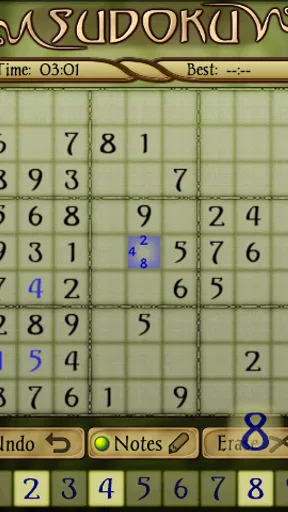
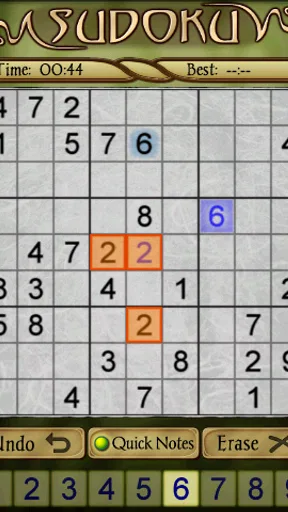
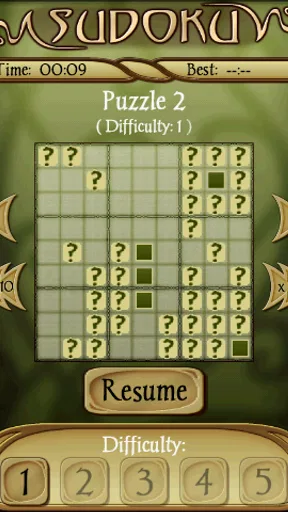
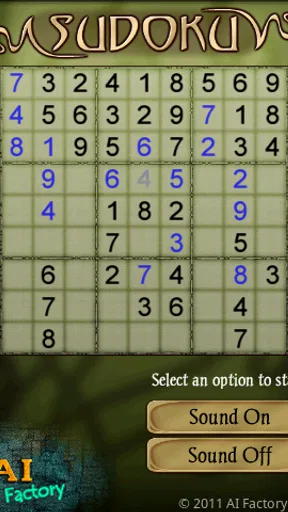
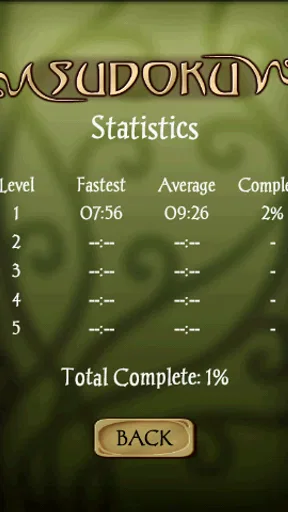
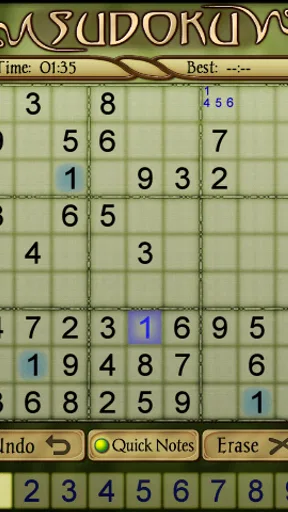
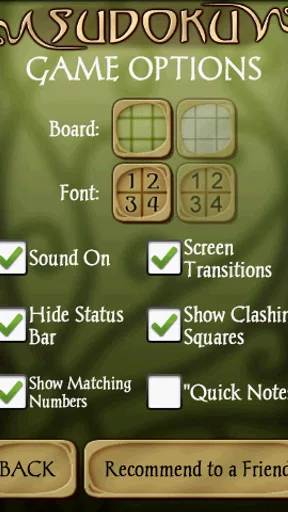
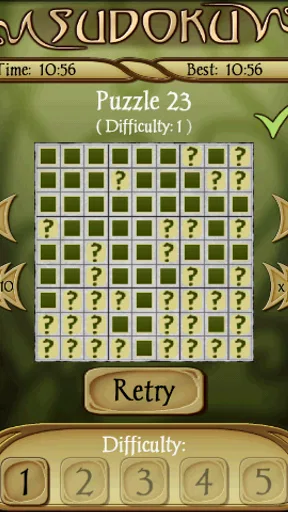
Our Review of Sudoku Pro
 Analysis by Appyee
I tend to judge a Sudoku game by a simple question: does it make solving feel calm and satisfying, or does it get in the way with clutter, pressure, and unnecessary extras? After spending time with Sudoku Pro, I found a focused board game that understands the appeal of the puzzle itself. It is built for people who want a substantial collection of classic Sudoku boards and a straightforward way to work through them, rather than a noisy package of unrelated modes.
The first thing to understand is what you are paying for. This is a $4.99 puzzle game from AI Factory Limited, with a 4.7 average from around 2.6 thousand ratings and more than 100 thousand installs. Those figures suggest a solid audience, but they do not decide whether it belongs on your phone. The more useful question is whether its traditional approach suits the way you like to solve.
How to decide if this Sudoku game fits you
I use this section to help you decide whether a self-directed puzzle collection matches your routine, rather than simply whether you enjoy Sudoku in theory. The key distinction is how you stay interested: choosing your own board and pace, or relying on prompts, competition, and fresh formats to bring you back. That difference leads naturally to the bigger question of whether this game remains worthwhile after its first few sessions.
A good match for deliberate, offline-style puzzle sessions
Sudoku Pro is a board game in the most direct sense: you open a grid, study the relationships between numbers, and make progress through logic. The appeal is not fast reflexes or a competitive leaderboard. It is the small mental reward that comes from spotting a missing possibility, narrowing a row, or realizing that a number can occupy only one square in a box.
I think the strongest audience is someone who wants a dependable puzzle to return to during short breaks. You can treat a board as a five-minute distraction, or keep working until the whole grid is complete. That flexibility matters. A Sudoku game is much less useful when every session demands a fixed commitment, and this one naturally supports stopping and resuming at your own pace.
The game includes 2,500 puzzles spread across five difficulty levels. That gives the experience a clear sense of progression without making the central idea complicated. A beginner can stay with gentler boards while learning the logic, then move upward when familiar patterns start to feel automatic. More experienced players can skip the introductory work and spend their time on harder grids.
What I look for before choosing a puzzle app
When I compare Sudoku games, I pay attention to four things: the quality of the puzzle supply, how comfortable the board is to use, whether the difficulty feels meaningful, and how much friction appears between opening the app and solving. A large puzzle count is useful only if the boards remain enjoyable. A polished interface is helpful only if it makes entering and checking numbers easier rather than distracting from the grid.
I also consider how the app fits into a personal routine. Some players want a daily challenge, social competition, timed events, or a constant stream of new content. Others prefer a self-contained collection that does not ask them to compare their speed with anyone else. Sudoku Pro is much more convincing for the second group.
There is another practical decision: do you want to pay once for a dedicated puzzle, or use a free alternative that may be supported by advertising or connected features? The price makes the choice more deliberate, but it also gives the game a clear identity. You are buying a focused Sudoku experience rather than signing up for a broader puzzle platform.
The five-level structure is more useful than it first appears
Difficulty labels can be vague, so I would not choose a level based only on pride. A board that is technically solvable may still be a poor fit if it requires techniques you have not learned yet. I found it more useful to treat the levels as a way to manage concentration. Easier puzzles work well when I am tired or only half-focused; harder ones are better when I want a proper mental workout.
A practical habit is to keep a difficult board open while resisting the urge to guess. If progress stops, I go back through rows, columns, and boxes and ask what each empty cell can still accept. That approach turns the game into a training tool rather than a test of patience. The five-level range supports this because it lets you step down temporarily without abandoning the whole collection.
One non-obvious advantage of a fixed puzzle library is that it can help you notice your own solving habits. If you repeatedly stall at the same level, the problem may not be the game; it may be that you rely too heavily on scanning for obvious singles and do not yet look for pairs or restricted candidates. Moving between levels gives you a chance to practice without constantly changing the rules or presentation.
Where the game wins against broader puzzle apps
Sudoku Pro wins through concentration. It does not need to compete with word games, logic collections, or arcade distractions because its purpose is narrower. For me, that makes it easier to open when I already know what I want to do. There is less temptation to spend time browsing modes instead of solving.
It also suits players who prefer classic Sudoku over variations. If your ideal session involves a familiar nine-by-nine grid and a steady increase in challenge, a dedicated board game is often more satisfying than an app that treats Sudoku as one item in a large catalog. The focused design keeps the mental rhythm intact: inspect, test, eliminate, and confirm.
The large collection is another meaningful strength. Having 2,500 boards available is different from relying on a single daily puzzle. You can choose a session based on your energy and available time instead of waiting for a new board to arrive. That is especially useful for travel, waiting rooms, or evenings when you want something quiet but not completely passive.
I also like the way a substantial library changes the pressure of solving. When there is only one puzzle available, a mistake can feel like a setback because you may have to abandon the day’s challenge. With a broad collection, I can stop a board, switch difficulty, or begin another one without feeling that I have used up the experience.
Small habits that make the collection more valuable
My favorite way to use it is to choose a difficulty before opening a board, rather than repeatedly jumping around after the first obstacle. That creates a clearer goal. For a short break, I choose an easier level and aim to complete a section of the grid. For a longer session, I choose a harder board and treat the process as deliberate practice.
Another useful habit is to pause when a board becomes guesswork. Guessing can produce a completed grid, but it teaches very little and makes it harder to identify where the logic went wrong. Instead, I review the candidates I have already considered and look for a number that is forced within a row, column, or three-by-three box. This is a simple workflow, but it turns the game into a better learning environment.
I also recommend not judging the game by the speed of your first few sessions. Sudoku skill is uneven: one board may feel easy, while another at the same level exposes a blind spot. The collection is large enough to make patterns visible over time. If you record mentally where you tend to stall, you can use the levels as targeted practice rather than as a ladder you must climb continuously.
Where competing categories may fit better
Sudoku Pro is not automatically the best choice for everyone. If you want a free app and do not mind advertising or a less focused presentation, a general puzzle platform may be more appealing. Such services can offer Sudoku alongside crosswords, number games, and other diversions, which is convenient if variety matters more than a dedicated solving environment.
A daily-challenge app may suit you better if the ritual of receiving one fresh puzzle is the main attraction. That format creates a sense of occasion and can encourage consistency. Sudoku Pro takes the opposite approach: it gives you a broad supply to choose from, so the experience feels more like owning a puzzle book than following a daily calendar.
Players who enjoy social comparison should also look elsewhere. Competitive Sudoku products often emphasize times, rankings, streaks, or shared challenges. Those features can make solving more motivating for some people, but they can also change the mood from thoughtful to hurried. This game is a better fit if you want to improve privately and measure progress by understanding, not by speed.
There is a similar trade-off for people who want unusual Sudoku variants. If your interest is in irregular regions, extra rules, or puzzle formats that depart from the classic board, a specialized variant app will probably offer more stimulation. The strength of this title is its commitment to traditional Sudoku, so that same focus becomes a limitation once you have exhausted your interest in the standard form.
What the purchase means in everyday use
At $4.99, the decision is not about whether the game is expensive in absolute terms; it is about whether you will return to it often enough to value a dedicated collection. I would be comfortable recommending the purchase to someone who already knows they enjoy Sudoku and wants a stable game for repeated sessions. I would be more cautious with a curious beginner who has never completed a grid and is unsure whether the format will hold their attention.
The age rating is Everyone, which matches the nature of the content. There is no need to frame it as an adult-only hobby or a competitive activity. It is suitable for a broad audience, although younger players may still need to learn the basic logic before the harder levels become enjoyable.
The game was released on March 29, 2011, and its current version is 2.44. It supports devices running Android 6.0 or later. Those details matter if you are using an older phone or tablet, and they also explain why I see this as a mature, established puzzle product rather than a newly experimental one.
The cost of switching from another Sudoku app is fairly low in terms of learned skill. The rules remain familiar, so you do not have to relearn how the puzzle works. The real adjustment is behavioral: moving from a daily or social service to a self-directed library. If you rely on reminders, streaks, or external competition to keep solving, a more feature-heavy alternative may hold your attention better.
A realistic way I would use it
Imagine having twenty minutes before an appointment. I would open the game, select a comfortable level, and begin a board without needing to decide what kind of activity I want. I would fill the obvious entries first, mark the relationships I can see, and stop when it is time to leave. Later, I could return to the same puzzle rather than starting from scratch.
On a quieter evening, I would choose a more demanding level and avoid rushing. If I reached a dead end, I would use the pause as a chance to review the grid instead of immediately abandoning it. That is where the large collection becomes useful: the game gives me room to practice patience without making one difficult board feel like the end of the session.
For a family setting, the Everyone rating and recognizable rules make it approachable, but I would not assume every player will enjoy the same level. One person may prefer quick, easy boards while another wants a challenge. The five-level structure lets each player choose a suitable starting point, although the game is still fundamentally a solo solving experience rather than a shared party game.
Limitations worth accepting before you buy
The focused design can feel plain if you expect constant novelty. A large number of classic puzzles does not change the basic activity, and no amount of collection size will satisfy someone who wants a different game every few minutes. I would not choose this for visual spectacle, story, or fast entertainment.
There is also a difference between having many puzzles and having a personalized training plan. The collection offers breadth, but players who want detailed lessons, guided technique explanations, or a structured coaching system may prefer an educational Sudoku app. Those tools can be better when the goal is to learn named solving methods rather than simply work through boards.
Another possible friction point is the paid commitment. Some people are happy to try a free version of a puzzle before spending anything. Here, the value depends on your existing interest. If you solve Sudoku only once in a while, a free general-purpose option may be enough. If you use puzzle apps regularly, paying for a dedicated experience can be easier to justify than tolerating interruptions or navigating a crowded catalog.
I would also avoid assuming that a higher difficulty level automatically means a better puzzle. The right level is the one that makes you think without turning every move into frustration. A useful compromise is to alternate: use an easier board to maintain momentum, then attempt a harder one when you have the time and patience to analyze it properly.
My recommendation for different kinds of players
I recommend Sudoku Pro to the classic Sudoku fan who wants a substantial, self-contained board game and does not need social competition. It is particularly appealing if you like choosing your own pace, moving between five levels, and keeping a puzzle available for short or long sessions. The 4.7 average and established install base reinforce my impression that it has found a dependable audience, but the real reason to choose it is the focused structure.
I would recommend it less strongly to someone who needs daily reminders, online events, extensive tutorials, unusual variants, or a broad collection of unrelated games. Those players may get more from a specialized training app, a social Sudoku service, or a free puzzle platform. The alternatives are not necessarily better; they simply prioritize different motivations.
For me, the deciding factor is whether I want Sudoku to remain the whole point. When the answer is yes, the straightforward approach works. I can open the game, select a suitable challenge, and spend my attention on the grid instead of managing a stream of extras. That simplicity is not a weakness for the right player; it is the reason to choose it.
Overall, I see this as a reliable paid board game for people who already enjoy the classic number puzzle and want plenty of room to practice. It does not try to reinvent Sudoku, and I would not buy it expecting a social network or a constantly changing entertainment package. I would buy it for the quiet satisfaction of solving one more grid, with enough difficulty range to keep that habit useful for a long time.
My clear recommendation: choose it if you value a focused collection of classic Sudoku puzzles and prefer self-directed sessions. Skip it in favor of a broader or more competitive alternative if motivation comes from rankings, daily events, or variety. For everyone in between, the sensible test is simple: if you can imagine returning to a traditional Sudoku board several times a week, this dedicated game is likely to earn its place on your device.
Verdict
Strengths of Sudoku Pro
- Clean interface makes puzzles easy to read on small screens.
- Multiple difficulty levels suit both beginners and experienced players.
- Hints help players progress without revealing the full solution.
- Offline play is convenient when no internet connection is available.
- Quick games make it easy to fit a puzzle into short breaks.
Limitations of Sudoku Pro
- Some advanced features may require payment or contain advertisements.
- The app may feel basic for players seeking social or competitive modes.
- Limited customization can make the experience less personal.
- Hints can reduce the challenge for users who prefer pure logic solving.
- Puzzle difficulty may vary, so some boards can feel repetitive.
Other Releases by AI Factory Limited
View All


Similar Picks in This Category
View All
Ludo King®
Gametion4.1

Ludo
Yarsa Games4.6

Tile Master® - Matching Game
Higgs Studio3.6

Checkers Online
CC Games4.6

Dominoes
Loop Games4.7

Chess
Chess Prince4.6
Frequently Asked Questions
What is Sudoku Pro, and how does the game work?
Sudoku Pro is a digital version of the classic number-placement puzzle. The objective is to complete a 9×9 grid so that every row, column, and 3×3 section contains the numbers one through nine without repetition. The app is designed for individual play and typically offers multiple difficulty levels, making it suitable for beginners as well as experienced Sudoku players.
Does Sudoku Pro include different difficulty levels?
Yes, Sudoku Pro is intended to accommodate different playing abilities through a range of puzzle difficulties. New players can usually begin with easier boards to learn the rules and develop solving habits, while advanced users can select harder challenges that require more deduction and careful planning. The available levels may vary depending on the app version and platform.
Can I play Sudoku Pro without an internet connection?
Sudoku Pro is generally suitable for offline play, allowing users to solve puzzles without a continuous internet connection. This makes it convenient for travel, commuting, or situations where mobile data is unavailable. However, certain features—such as advertisements, cloud synchronization, online statistics, updates, or purchases—may require an internet connection depending on the version installed.
What tools and features are available while solving puzzles?
Sudoku Pro commonly provides helpful tools such as number notes, mistake checking, hints, undo and redo controls, timers, and puzzle progress tracking. These features can make the experience more comfortable, especially for beginners, although relying heavily on hints may reduce the challenge. Before downloading, check the specific store listing because available tools can differ between Android and iOS versions.
Is Sudoku Pro free to download, and does it contain advertisements?
Sudoku Pro may be available as a free download, but the exact business model depends on the edition and device platform. Free versions can include advertisements, optional in-app purchases, or premium upgrades that remove ads and unlock additional content. It is worth reviewing the app-store description, permissions, subscription terms, and purchase details before installing so there are no unexpected costs.
Play our best games!


